1. Executive Summary & Project Rationale
With the dual expansion of high-yielding dairy herds and decentralized bio-energy infrastructure (under the national SATAT initiative), the deficit of quality green biomass presents a major commercial opportunity. Traditional fodder options suffer from high seasonality, low per-acre yields, and erratic crude protein profiles.
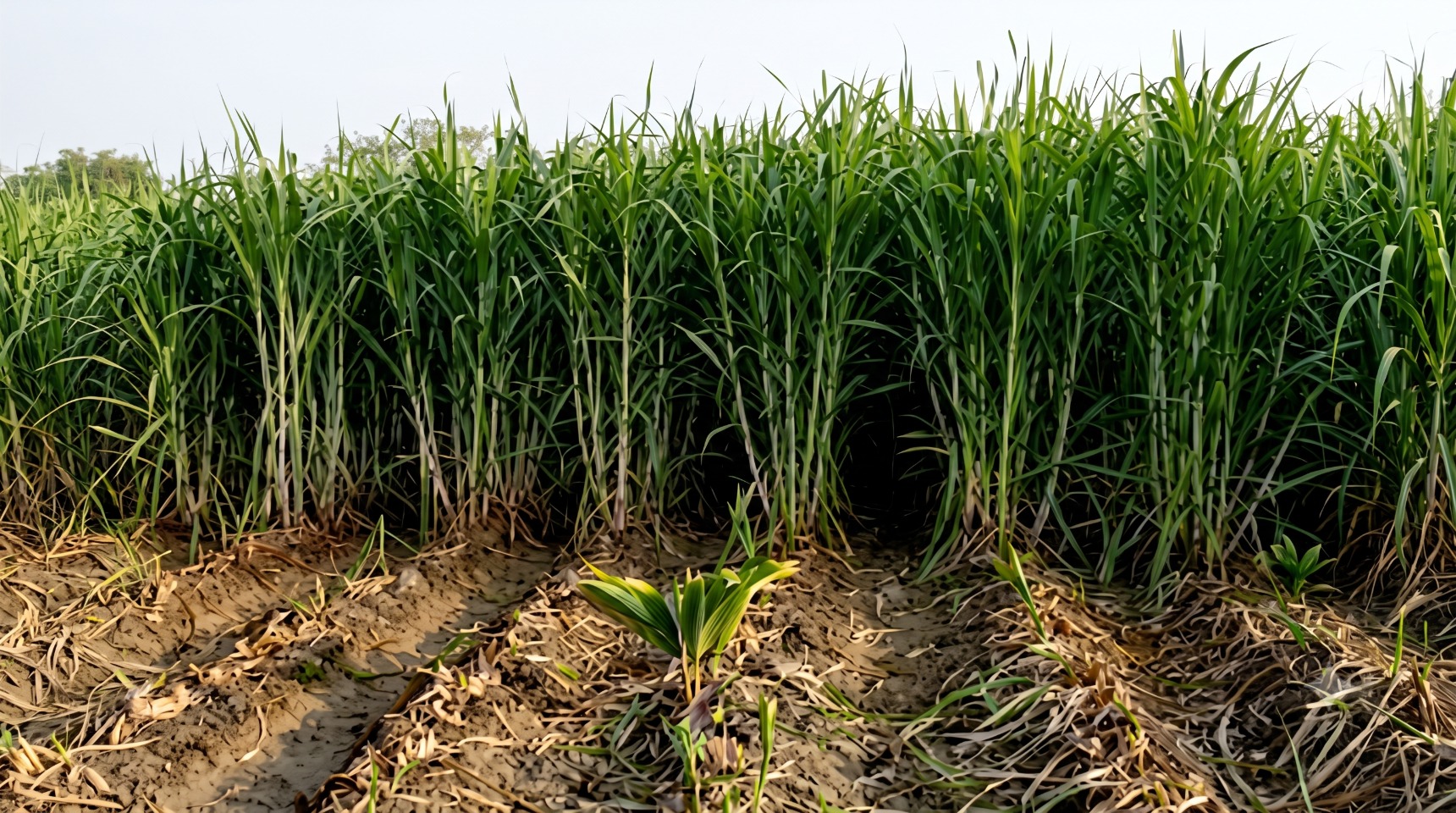
Super Napier Grass (Pennisetum purpureum × Pennisetum americanum) delivers an annual yield profile of 180 to 250 tonnes of fresh green biomass per acre under disciplined agronomic management. This project creates a commercial-scale biomass production hub designed to eliminate forage volatility for local livestock clusters while supplying consistent, non-woody, digestible feedstock for commercial CBG digesters.
2. Key Objectives
Perennial High-Yield Biomass Supply: Establish a perennial production cycle yielding 6 to 8 cuttings per year after an initial establishment period of 75–90 days.
Dual-Market Revenue Diversification: Hedging market risks by splitting seasonal supply between fresh dairy livestock fodder / fermented silage bales and scheduled biomass delivery to bio-methanation CBG facilities.
Nutritional Optimization for Ruminants: Deliver fresh cut fodder maintaining 14% to 18% crude protein (CP) at optimal cutting age (45–50 days), reducing concentrate feed dependency in dairy herds.
High C/N & Biogas Efficiency: Supply juvenile to mid-maturity vegetative biomass with minimal lignin buildup, accelerating anaerobic digestor retention time and maximizing biogas ($CH_4$) output.
3. Technical & Agronomic Parameters
| Parameter | Specifications & Standards |
| Planting Material | Certified two-node stem cuttings / rooted slips (Pakchong 1 / Super Napier) |
| Planting Spacing | $3\text{ ft} \times 2\text{ ft}$ (Standard) or $4\text{ ft} \times 2\text{ ft}$ (Inter-row mechanical harvesting) |
| Plant Density | 5,400 to 7,200 slips per acre |
| Irrigation System | Sub-surface or online drip irrigation (spaced drippers @ 40–50 cm) with fertigation venturi |
| Harvesting Interval | First cut at 75–85 days; ratoon cuts every 42–50 days |
| Crude Protein Profile | 14% – 17% (Harvested at 45 days) |
| Total Digestible Nutrients (TDN) | 55% – 60% |
| Biomass Yield | 35 – 45 tonnes/acre per cut (180 – 250 tonnes/acre/year across 6 cuts) |
4. Primary Market Applications & Operations
A. Commercial Dairy & Livestock Green Fodder
Fresh Chop Operations: On-site commercial tractor-driven chaff cutters delivering uniform 10–15 mm cut green forage directly to farm-gate off-takers within a 50 km logistics radius.
Silage Production & Baling: Micro-bale packing (50 kg & 100 kg hermetic UV-stabilized bags/stretch film) treated with homofermentative lactic acid bacteria (LAB) inoculants. Ensures continuous marketability during peak summer forage deficits.
B. CBG (Compressed Bio-Gas) Industrial Supply
Controlled C:N Feedstock Supply: Scheduled cutting cycles (50–60 days) to optimize carbon-to-nitrogen ratios ($25:1$ to $30:1$) for industrial continuous stirred-tank reactors (CSTR).
Pre-Processing & Bulk Logistics: Field-side pre-shredding to reduce bulk density, loaded via hydraulic tippers directly into transport trailers serving regional CBG plants.
5. Financial Overview & Operational Cost Heads
Capital Expenditures (CapEx):
Land preparation, deep sub-soiling, and laser leveling.
Procurement of high-quality two-node stem slips / mother nursery establishment.
Automation-ready drip irrigation system with fertigation automation.
Farm mechanization: Tractor-mounted fodder harvesters, 10 HP industrial chaff cutter, silage baling unit, and farm-level weighing bridge.
Operational Expenditures (OpEx):
Organic manuring (FYM / digested CBG bio-slurry / press mud) and NPK fertigation.
Cutting, gathering, loading, and local transport logistics.
Routine weeding, bund maintenance, and gap-filling.
6. Expected Outcomes & Impact
High land-use efficiency generating recurring cash flows starting in Month 3, with minimal replanting overhead for 5 to 7 continuous years.
Sustainable integration into circular rural economies by returning bio-manure / fermented organic manure (FOM) from CBG digestors back onto the Napier fields to maintain soil organic carbon.